MVHR system explained
Mechanical Ventilation with Heat Recovery or MVHR is a sophisticated technology designed to provide continuous fresh filtered air to a building while simultaneously recovering heat that would otherwise be lost through traditional ventilation methods. As modern construction standards focus increasingly on airtightness to improve energy efficiency the need for controlled ventilation has never been more critical. An MVHR system addresses this requirement by managing the internal environment of a property ensuring that it remains fresh healthy and energy efficient throughout the year.
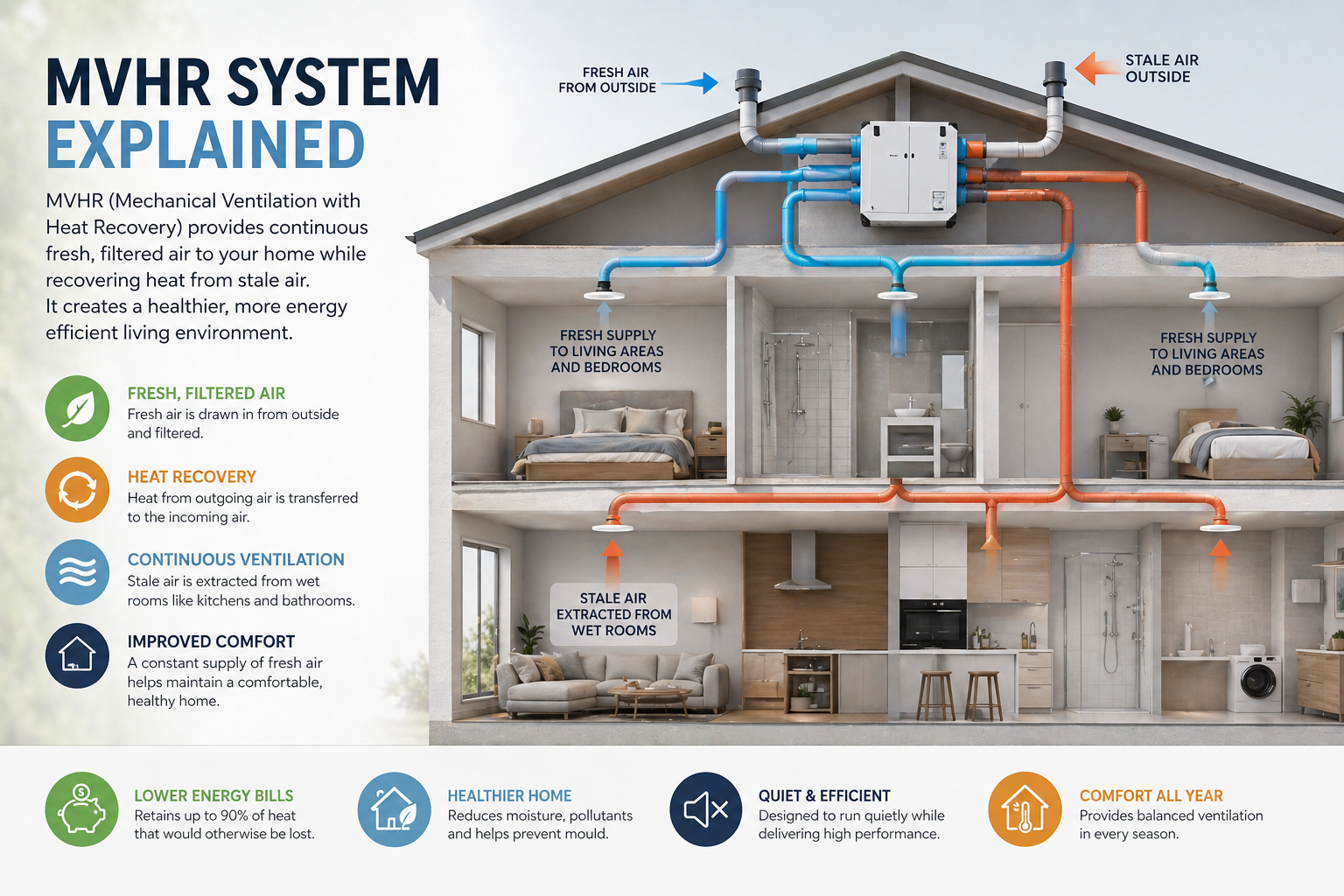
In essence an MVHR system works by extracting warm moist air from wet rooms such as kitchens bathrooms and utility rooms. This stale air is passed through a central heat exchanger before being exhausted to the outside. At the same time fresh outdoor air is drawn into the system and passed through the same heat exchanger where it picks up the warmth from the outgoing air. The two airflows never mix ensuring that the incoming air is clean and tempered before it is supplied to living areas like bedrooms and lounges. This process can recover up to ninety five percent of the heat from the extracted air significantly reducing the demand on the primary heating system.
For those looking for professional ventilation London services understanding the technical specifications of these systems is the first step toward a more sustainable home or workspace. Whether you are working on a new build project or a major renovation implementing this technology ensures compliance with modern standards while providing a superior living experience.
How the heat recovery process works
The core of any MVHR system is the heat recovery unit which contains a high efficiency heat exchanger a supply fan and an extract fan. The unit is typically installed in a loft space plant room or a kitchen cupboard depending on the size of the property and the available space. A network of concealed ducts connects the unit to every room in the building allowing for precise control over air movement.
The process begins with the extraction of humid air from areas where moisture and odours are generated. This air is pulled through the ducting toward the heat recovery unit. Simultaneously fresh air is drawn in from the outside via an external wall or roof terminal. Inside the heat exchanger the warm extract air and the cool supply air pass each other in separate channels. The heat is transferred through the surfaces of the exchanger warming the fresh incoming air. During summer months many systems include a summer bypass feature which allows the fresh air to enter without being heated when the indoor temperature is already high.
This mechanical approach to ventilation is far superior to passive methods like trickle vents or extractor fans. While traditional fans simply dump warm air outside and rely on cold draughts to replace it an MVHR system maintains a balanced pressure and a consistent temperature. This makes it an ideal choice for domestic applications where comfort and energy savings are top priorities.
The benefits of installing MVHR
One of the most significant advantages of an MVHR system is the improvement in indoor air quality. The system includes filters that remove pollen dust and other airborne pollutants before the air enters the building. This is particularly beneficial for individuals suffering from asthma hay fever or other respiratory conditions. By providing a constant supply of filtered air the system creates a much healthier indoor environment.
- Significant reduction in annual heating bills due to high heat recovery efficiency.
- Elimination of condensation and mould growth by maintaining low humidity levels.
- Continuous supply of fresh filtered air regardless of external weather conditions.
- Reduction in external noise ingress as windows can remain closed.
- Removal of cooking odours and volatile organic compounds from the air.
Beyond health and comfort the financial benefits are also noteworthy. By reclaiming heat that is usually wasted homeowners can lower their carbon footprint and reduce energy consumption. In commercial settings this translates to lower operational costs and a more productive environment for employees as CO2 levels are kept at an optimal low. To find out how these systems can benefit your specific project you can request a quote from our specialist team.
Ideal applications for MVHR systems
MVHR is most effective in buildings that have a high level of airtightness. In older draughty properties the benefits of heat recovery are often diminished because air escapes through gaps in the building fabric rather than through the controlled ventilation system. Therefore MVHR is the gold standard for new build homes constructed to modern building regulations or those built to the Passivhaus standard.
Residential developers increasingly choose MVHR to meet the strict requirements of current energy policies. Large luxury homes with multiple bathrooms especially benefit from the moisture control provided by these units. Similarly urban apartments in noisy or polluted areas find MVHR essential as it allows residents to enjoy fresh air without opening windows and letting in traffic noise or exhaust fumes. The versatility of the technology means it can be scaled for everything from a small flat to a massive office complex.
Building Regulations Part F and compliance
In the United Kingdom ventilation is governed by Building Regulations Part F. These regulations specify the minimum ventilation rates required to maintain a healthy indoor environment. As homes have become more insulated and airtight the regulations have evolved to ensure that buildings do not become stale or damp. Part F recognises MVHR as a System 4 ventilation method providing a comprehensive solution for whole building air management.
Compliance involves ensuring that the system is designed to provide the correct flow rates for both boost and trickle modes. Boost mode is used during periods of high humidity such as when cooking or showering while trickle mode provides a steady background flow. A professional installer will ensure that the system is commissioned correctly which involves measuring the air flow at every terminal using a calibrated anemometer. This data is then submitted to building control to prove that the installation meets the necessary legal standards.
System design and installation considerations
The success of an MVHR installation depends heavily on the design phase. It is not a product that can be simply plugged in without careful planning. The ducting layout must be optimised to ensure quiet operation and efficient air distribution. Rigid ducting is generally preferred over flexible alternatives because it offers lower air resistance and is easier to clean over the long term. Proper insulation of the ducting where it passes through unheated spaces is also vital to prevent condensation from forming inside the pipes.
Placement of the central unit is another key factor. It should be located in a position that allows for easy access to change filters which typically need to be replaced every six to twelve months. The unit must also have a condensate drain to remove the moisture collected from the extract air. Noise should be considered as well although a well designed system will be virtually silent in normal operation. Silencers or attenuators are often installed near the unit to prevent fan noise from travelling through the ductwork into the living spaces.
Maintenance for long term performance
Maintaining an MVHR system is relatively simple but essential for preserving its efficiency and air quality benefits. The primary task for the user is the regular inspection and replacement of air filters. Over time these filters become clogged with dust and debris which can restrict air flow and put additional strain on the fans. Most modern units have a filter change indicator that alerts the homeowner when maintenance is required.
Every few years it is recommended to have a professional service the unit. This involves cleaning the heat exchanger core checking the fans for any signs of wear and ensuring the condensate drain is clear. The ducting should also be inspected to ensure no blockages have occurred. A well maintained system can operate effectively for many decades providing a reliable source of fresh air and heat recovery. Investing in professional maintenance ensures that the system continues to operate at its peak performance levels and remains compliant with health and safety guidelines.
Conclusion
The MVHR system is a transformative technology for the modern built environment. It provides a solution to the paradox of wanting airtight energy efficient buildings while needing constant fresh air for health and comfort. By understanding how the system works and the various benefits it offers property owners can make informed decisions about their ventilation strategy. From reducing energy bills to protecting the fabric of the building from dampness MVHR represents a smart investment in the future of sustainable living. Whether for a small home or a large commercial project the advantages of mechanical ventilation with heat recovery are clear making it an essential component of high quality construction in the twenty first century.
Written by Air Logic Climate Solutions
Our engineers and technical writers share expert insights on heating, cooling and ventilation for commercial and domestic properties across London.