Understanding why your air conditioner is not cooling
There is nothing quite as frustrating as returning home on a warm summer day in London only to find that your cooling system is failing to lower the temperature. When you discover your air conditioner not cooling as it should, the immediate reaction is often one of concern regarding potential repair costs and the discomfort of a humid environment. In the United Kingdom, where extreme heat is becoming more frequent, a reliable cooling system is no longer a luxury but a necessity for many households and businesses alike. Troubleshooting these issues requires a systematic approach to identify whether the fault is a simple maintenance task or a complex mechanical failure requiring professional intervention.
An air conditioner operates on the principle of heat exchange, removing warmth from the interior air and rejecting it outside. When this process is interrupted, the unit might continue to run, blowing air that feels lukewarm or even hot. This guide explores the most common reasons for a system failure and provides actionable advice for owners. If you find yourself in an urgent situation where the temperature is rising rapidly, you may need to seek emergency repairs London to restore comfort to your property immediately.
The impact of blocked air filters
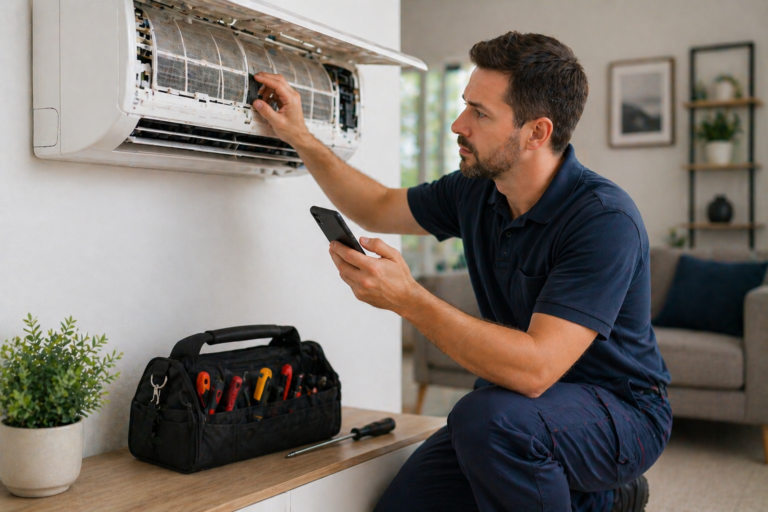
One of the most frequent causes for an air conditioner not cooling effectively is a dirty or clogged air filter. The filter is designed to capture dust, pollen, and other airborne particulates to protect the internal components of the machine and improve indoor air quality. Over time, these particles accumulate, creating a dense barrier that restricts the volume of air passing through the evaporator coil. When airflow is significantly reduced, the system struggles to circulate enough cooled air to satisfy the thermostat settings.
Beyond the lack of cooling, a blocked filter can lead to secondary problems such as the freezing of the internal coils or premature wear on the fan motor. The motor must work much harder to pull air through a restricted passage, leading to increased electricity consumption and potential overheating. It is recommended that filters are checked every month during periods of heavy use and cleaned or replaced as necessary. For those who prefer a professional touch to ensure every component is handled correctly, scheduling ac servicing London is the most reliable way to maintain peak performance and prevent these avoidable issues.
Refrigerant leaks and system pressure
Refrigerant is the lifeblood of any cooling system. It is a specialised fluid that transitions between liquid and gas states to absorb and release heat. A common misconception is that refrigerant is consumed over time like fuel in a car. In reality, a cooling system is a sealed loop, and the refrigerant should last the entire lifespan of the unit. If the levels are low, it is an certain indication of a leak within the copper pipework or the connection points. When there is insufficient refrigerant, the system cannot absorb enough heat from your rooms, resulting in an air conditioner not cooling despite the fans running at full speed.
Symptoms of a refrigerant leak include a persistent hissing sound, the presence of ice on the refrigerant lines, or a noticeable increase in humidity levels indoors. It is vital to understand that handling refrigerant requires specific certifications under UK law, specifically the fluorinated gas regulations. Attempting to top up the gas yourself is not only dangerous but illegal without the correct qualifications. If you suspect a leak, you should request a quote for a professional leak detection and repair service to ensure the system is sealed and recharged correctly.
Frozen evaporator coils and airflow restrictions
It might seem counterintuitive that an air conditioner failing to cool could be frozen, but this is a very common technical fault. The evaporator coil is responsible for absorbing heat from the indoor air. For this process to work, there must be a constant flow of warm air over the coils. If the airflow is restricted due to dirty filters, blocked vents, or a failing blower fan, the temperature of the coil can drop below freezing. Moisture in the air then condenses on the coil and turns to ice, creating an insulating layer that prevents any further heat absorption.
Once a coil is frozen, the air conditioner not cooling issue becomes absolute. The unit will effectively blow air against a block of ice, which might even cause water to leak from the internal unit as the ice melts unevenly. If you notice ice formation, you should turn the system off immediately to allow it to defrost naturally. Never attempt to scrape the ice off as you may puncture the delicate aluminium fins or the copper tubing. Once the unit is clear of ice, check the filters and ensure all internal vents are open and unobstructed by furniture or curtains.
Compressor and capacitor failures
The compressor is often referred to as the heart of the air conditioning system. Located in the outdoor unit, its job is to circulate the refrigerant through the system and apply the necessary pressure to facilitate heat exchange. If the compressor fails, the entire cooling process grinds to a halt. A failing compressor might produce a loud banging or clattering noise, or it might fail to start entirely, often accompanied by a humming sound as the electrical components attempt to engage. Because the compressor is a high voltage component, any troubleshooting in this area must be conducted with extreme caution.
Often, what appears to be a compressor failure is actually a fault with the start capacitor. Capacitors store electrical energy and provide the initial boost needed to get the compressor and fan motors running. These components can fail due to age, electrical surges, or extreme outdoor temperatures. Replacing a capacitor is a routine task for a qualified engineer and can often save a homeowner from the significant expense of a total compressor replacement. Regular inspections during professional maintenance visits will often identify bulging or leaking capacitors before they fail completely, saving you from a sudden loss of cooling during a heatwave.
Thermostat calibration and power issues
Sometimes the reason for an air conditioner not cooling is not a mechanical failure within the units themselves but a simple communication error from the thermostat. The thermostat is the brain of the system, telling the compressor and fans when to turn on and off based on the ambient temperature. If the thermostat is incorrectly calibrated, it may believe the room is already at the target temperature and fail to trigger the cooling cycle. Additionally, battery operated thermostats may behave erratically when the power levels are low, leading to inconsistent cooling or a complete lack of response.
Before calling out an engineer, ensure that the thermostat is set to the cool mode rather than the fan only or heat mode. Check that the temperature setting is at least five degrees below the current room temperature. It is also worth checking your consumer unit to ensure that the circuit breaker for the air conditioning system has not tripped. Power surges or heavy electrical loads elsewhere in the property can sometimes cause the breaker to flip, cutting off power to the outdoor condenser unit while leaving the indoor unit running on a separate circuit. This leads to the confusing situation where the indoor unit is blowing air but no cooling is taking place.
Outdoor condenser obstructions and cleanliness
The outdoor unit, known as the condenser, is responsible for releasing the heat collected from inside your property into the outside air. To do this efficiently, it requires a significant amount of clear space around it for airflow. In many London properties, space is at a premium, and condenser units are often tucked away in narrow alleys or behind decorative screens. If the unit is surrounded by overgrown plants, accumulated leaves, or general garden debris, it cannot reject heat effectively. This causes the system to work harder and eventually leads to the air conditioner not cooling as the internal pressures rise too high.
Regularly cleaning the exterior of the condenser is a simple task that can significantly improve efficiency. Use a soft brush to remove cobwebs and leaves from the fins, and ensure there is at least a two foot clearance on all sides of the unit. Be careful not to use a high pressure washer on the delicate fins as they can easily bend, which further restricts airflow. If the fins are already bent, an engineer can use a specialised comb to straighten them during a routine service. Keeping the outdoor environment clear is a primary step in ensuring your system remains operational throughout the hottest months of the year.
Electrical faults and sensor malfunctions
Modern air conditioning units are packed with sophisticated electronics and sensors designed to protect the system from damage. For example, a discharge thermistor monitors the temperature of the refrigerant as it leaves the compressor. If this sensor detects a temperature that is too high, it will shut down the system to prevent a catastrophic failure. While this protects your investment, it can result in an air conditioner not cooling with no obvious external cause. Diagnosing these electronic faults requires specialised diagnostic tools that interface with the system control board to read error codes.
Wiring issues can also develop over time, particularly in outdoor units where the cables are exposed to the elements. Rodents have been known to chew through insulation, and vibration from the compressor can occasionally loosen terminal connections. These electrical gremlins can be difficult to track down without the proper training. If your system is cycling on and off rapidly, or if the indoor unit is flashing a series of lights, it is usually indicating a specific fault code. Consult your manual or contact a specialist who can interpret these signals and perform the necessary electrical repairs safely.
The value of professional maintenance
While many of the issues described can be diagnosed by a keen property owner, the most effective way to handle an air conditioner not cooling is to prevent the problem from occurring in the first place. A comprehensive maintenance programme includes cleaning both the indoor and outdoor coils, checking refrigerant pressures, inspecting electrical connections, and verifying the operation of all safety sensors. This proactive approach not only extends the life of your equipment but also ensures that it operates at maximum energy efficiency, which is vital given the rising costs of electricity in the United Kingdom.
For commercial properties and high end residential installations, a regular service contract is often a requirement of the manufacturer warranty. Neglecting professional care can lead to the voiding of these warranties, leaving you responsible for the full cost of expensive parts. Whether you are dealing with a small wall mounted unit in a bedroom or a complex multi split system for an entire office building, the peace of mind offered by expert technicians is invaluable. If you have noticed a slight drop in performance or a strange noise coming from your unit, do not wait for a total failure. Reach out for ac servicing London today to keep your environment comfortable and your system reliable.
Summary of troubleshooting steps
- Check that the thermostat is set to cooling mode and the temperature is set correctly.
- Inspect the air filters for dust accumulation and clean or replace them if necessary.
- Ensure the outdoor condenser unit is free from obstructions like plants or debris.
- Verify that the circuit breaker in your electrical panel has not tripped.
- Look for signs of ice on the indoor unit or the refrigerant pipes.
- Listen for unusual noises such as grinding, hissing, or loud clicking.
- Check the batteries in your remote control or wall mounted thermostat.
By following these steps, you can often resolve minor issues without the need for a professional visit. However, if the problem persists or involves refrigerant and electrical components, always prioritise safety and call a qualified engineer. A well maintained air conditioner will provide years of reliable service, ensuring that even during the most intense London heatwaves, your home or office remains a cool and productive sanctuary. For a detailed assessment of your system needs or a transparent price for repairs, you can always request a quote from a reputable provider to ensure your cooling infrastructure is in the best possible hands.
Written by Air Logic Climate Solutions
Our engineers and technical writers share expert insights on heating, cooling and ventilation for commercial and domestic properties across London.