The Importance Of Early Preparation For London Property Owners
As the capital approaches the warmer months, the necessity for reliable climate control becomes a priority for homeowners and business managers alike. London summers have become increasingly unpredictable and intense, often characterized by high humidity and the urban heat island effect which keeps the city center warm throughout the night. To ensure your environment remains comfortable, you must prepare AC for summer well before the temperature begins to climb. Taking proactive steps prevents the stress of a system failure during a heatwave when demand for engineers is at its peak.
A well maintained system operates with far greater efficiency than one that has been neglected over the winter. When dust and debris accumulate within the internal components, the unit must work harder to achieve the desired temperature. This increased workload leads to higher energy consumption and elevated utility bills. By focusing on air conditioning London systems early, you can identify minor issues before they escalate into expensive repairs. Maintenance is not merely about comfort but also about protecting your investment and ensuring the longevity of your equipment.
The transition from spring to summer is the ideal window for performance checks. During this period, the air is often filled with pollen and urban pollutants which can further clog your system. Preparing early allows you to enjoy a seamless transition into the cooling season, providing peace of mind that your indoor air quality remains high and your cooling capacity is optimized for the challenges of a London July or August.
Cleaning And Maintaining Your Air Filter System
The most critical component of routine maintenance is the air filter. These components are designed to capture dust, allergens, and various particles to ensure the air circulating through your rooms is clean. Over several months of use, or even while sitting idle, filters can become heavily restricted. A clogged filter blocks normal airflow and significantly reduces the efficiency of the entire system. In a busy city like London, where fine particulate matter from traffic is prevalent, filters may require more frequent attention than in rural areas.
To begin your preparation, locate the filter panels within your indoor units. Most modern systems feature filters that can be easily removed and cleaned with warm water and a mild detergent. Ensure they are completely dry before you reinstall them to prevent the growth of mould or mildew. If your system uses disposable filters, now is the time to purchase replacements. Keeping a stock of filters ensures you can maintain the system throughout the peak season without delay.
Clean filters do more than just improve airflow. They also prevent dust from settling on the evaporator coils. When coils become dirty, they lose their ability to absorb heat effectively, which can cause the system to blow warm air or even freeze up entirely. Regular filter maintenance is the simplest way to prepare AC for summer while keeping your energy costs manageable and your indoor environment healthy.
Inspecting The External Condenser Unit For Debris
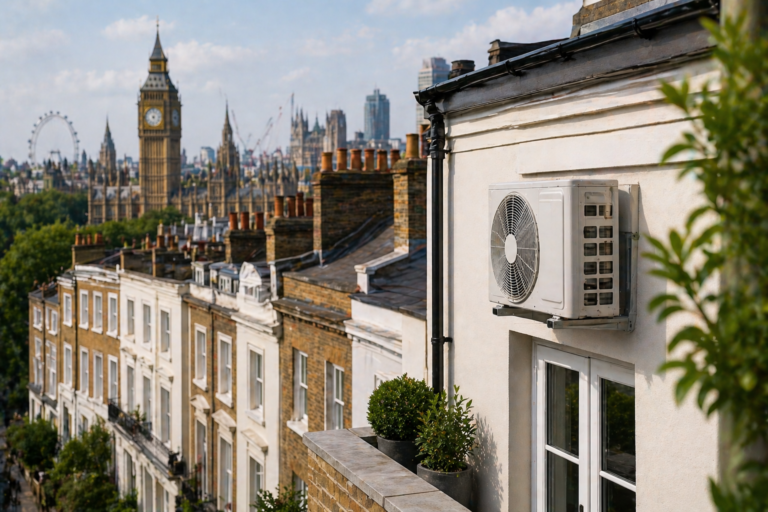
While much of the cooling process happens indoors, the outdoor condenser unit is responsible for releasing the heat extracted from your building. These units are exposed to the elements all year round and can easily become obstructed. During the autumn and winter months, wind can blow leaves, twigs, and litter into the casing. Furthermore, garden plants or weeds can grow around the base, restricted the vital airflow needed for heat exchange.
Before you turn your system on for the summer, clear a space of at least two feet around the outdoor unit. Remove any accumulated debris from the exterior fins. If the fins are bent, they can be carefully straightened, though this is often a task best left to those familiar with the delicate nature of the metal. If the condenser is located on a balcony or a busy London street level, it may also have a layer of grime or soot from local traffic which can act as an insulator, trapping heat inside the system.
Checking the outdoor unit also involves inspecting the refrigerant lines. These pipes should be covered in thick insulation to prevent energy loss. If the insulation has been damaged by weather or local wildlife, it should be replaced. Ensuring the outdoor portion of your system is clear and unobstructed is a vital step to prepare AC for summer and avoid mechanical strain during the hottest days of the year.
Verifying Refrigerant Levels And System Integrity
Refrigerant is the lifeblood of your air conditioning system. It circulates between the indoor and outdoor units, changing state to absorb and release heat. A system that is low on refrigerant will struggle to cool the air, leading to longer running times and potential damage to the compressor. It is a common misconception that refrigerant needs to be topped up regularly; in a perfectly functioning system, the refrigerant remains in a sealed loop and should never deplete.
If you notice that your system is not producing cold air despite the fans running, it may indicate a leak. Low refrigerant levels are often accompanied by hissing sounds or the presence of ice on the copper pipes. Because handling refrigerant requires specific certifications and adherence to environmental regulations in the United Kingdom, you should never attempt to fix a leak yourself. Identifying this issue early allows you to book a professional ac servicing London specialist to safely repair the leak and recharge the system.
Operating a system with a leak is not only inefficient but also harmful to the environment. Modern refrigerants are managed under strict F Gas regulations to prevent ozone depletion and global warming. Part of your summer preparation should involve a visual check of all visible pipework connections for any signs of oil spots, which often indicate a slow refrigerant leak. Addressing these integrity issues now ensures your system is ready for the peak demand of the London heat.
Clearing The Condensate Drain Lines
Air conditioning systems do more than cool the air; they also dehumidify it. As warm air passes over the cold evaporator coils, moisture condenses into water droplets. This water is collected in a tray and directed outside or into a building drain via a condensate line. Over time, these lines can become blocked by algae, dust, or sludge. A blocked drain line can lead to water backing up and leaking into your home, potentially damaging walls, floors, and electrical components.
To prepare AC for summer, you should check that the condensate drain is clear. You can often see the end of the pipe where it discharges water. If the line appears dry while the system is running, or if there is a musty smell coming from the indoor unit, a blockage is likely. Some homeowners use a vacuum to clear the line or flush it with a mixture of water and vinegar to kill any bacterial growth. However, if the blockage is deep within the system, professional tools may be required.
Ensuring the drainage system is functional is a key part of your maintenance routine. Water damage can be incredibly costly to repair, and a damp environment inside the unit can encourage the growth of bacteria which is then blown into your living space. A clear drain ensures that your system remains hygienic and that your property is protected from accidental leaks during periods of heavy use.
Conducting A Pre Summer Performance Test
Do not wait for a thirty degree day to find out if your air conditioning is working. The best way to prepare AC for summer is to conduct a full performance test while the outdoor temperatures are still mild. Turn the system on and set it to a cooling mode at a temperature a few degrees lower than the current room temperature. Listen carefully for any unusual noises such as grinding, squealing, or rattling, which could indicate failing bearings or loose components.
Monitor the system for at least twenty minutes. Ensure that the air coming from the vents is consistently cold and that the airflow is strong across all indoor units. Check the thermostat to see if it accurately reflects the room temperature and responds correctly to your settings. If you have a smart controller or a remote, verify that the batteries are fresh and the connection is stable. In London, where many people rely on their systems for both sleep and work, ensuring the quiet operation of the unit is just as important as the cooling capacity.
If the system cycles on and off too frequently, or if it fails to reach the set temperature, you have identified a problem before it becomes an emergency. This testing phase is the final step in your DIY preparation and provides the information you need to decide if professional intervention is required. It is always better to discover a fault in May than to suffer without cooling in July.
The Benefits Of Professional Servicing Before The Heatwave
While many maintenance tasks can be handled by the property owner, a professional service offers a level of depth that ensures total system reliability. Certified engineers have the tools to check electrical connections, measure amperage draw, and verify the precise pressure of the refrigerant. They can also perform a deep clean of the internal coils using specialized antimicrobial treatments that are not available to the general public. For those seeking a comprehensive solution, you can get a quote for a seasonal maintenance contract.
A professional service also validates your manufacturer warranty. Many brands require proof of annual maintenance to honor claims for replacement parts. In the context of London properties, where space is often at a premium and units are sometimes installed in difficult to reach locations, an expert engineer brings the necessary safety equipment to perform a thorough inspection. They can identify wear and tear on belts, motors, and capacitors that an untrained eye might miss.
Ultimately, booking a professional service is an investment in reliability. The peace of mind that comes from knowing your system has been vetted by an expert is invaluable. As the London skyline shimmers in the summer heat, you can relax in the knowledge that your air conditioning is operating at peak performance, providing a cool and healthy environment for your family or your employees.
Essential Summer Readiness Checklist
To summarize your preparation, follow this checklist to ensure nothing is overlooked. Complete these steps before the first major heatwave hits the city.
- Inspect and clean all indoor air filters to ensure maximum airflow.
- Replace disposable filters if they show signs of heavy soiling.
- Clear all debris, leaves, and plants from around the outdoor condenser unit.
- Check the insulation on the external refrigerant pipes for any damage.
- Clean the exterior fins of the condenser unit to improve heat exchange.
- Verify that the condensate drain line is flowing freely and is not blocked.
- Test the thermostat and replace batteries in remote controls if necessary.
- Run the system on cooling mode for twenty minutes to check for unusual noises.
- Confirm that the air output is cold and the fan speeds are adjustable.
- Schedule a professional service if the system has not been checked in the last year.
By following these detailed steps, you can prepare AC for summer and enjoy the best of the London season without the discomfort of a stifling indoor environment. Regular attention to your cooling system ensures it remains a dependable part of your property infrastructure for many years to come.
Written by Air Logic Climate Solutions
Our engineers and technical writers share expert insights on heating, cooling and ventilation for commercial and domestic properties across London.